
Mill Creek Historical Release Records
Mill Creek Correctional Facility is a former Oregon Department of Corrections minimum-custody prison in Salem. ODOC states that it permanently closed on June 30, 2021. It is not a current place to call about a new release, current placement, or present facility transfer. Any modern result that appears to place someone there needs correction through the active ODOC source.
For a person formerly held at MCCF, the relevant event may be a transfer to another Oregon prison, physical release followed by supervision, or full discharge. Those are different outcomes. An old reference to MCCF identifies a historic institution in one custody cycle. It does not establish where the person is now or whether all legal control ended.
Confirm MCCF Physical Release
Start with Oregon Offender Search. OOS covers people currently in ODOC custody or a local Community Corrections office. Search by first, middle, and last name or SID. The official help allows an asterisk within or at the end of a name, but not in an SID. Open the detail through the SID and compare identifiers before relying on the match.
- Identify the person by name, SID, aliases, and birth month or year where displayed.
- Read current location and status before reading any future date.
- Keep the projected release date separate from a recorded physical release or supervision status.
- Check VISOR for a reported custody event and BOPPPS for a final order when Board authority applies.
- Request the ODOC record when OOS no longer shows a fully discharged person.
OOS is not a permanent history and labels can vary by record. Save the observation date. The countywide Marion County released inmate search explains how state and county paths differ.
MCCF Offender Search Evidence
OOS may show names and aliases, SID, birth month and year, court name, current location, and offenses tied to the current incarceration. It can also route a user toward the current release-date calculation. Yet OOS states that it is not an official record. A person on parole or post-prison supervision may remain visible through a Community Corrections location, while someone who fully discharged may disappear.
| Evidence | Correct reading |
|---|---|
| MCCF location | Current prison placement, not a release |
| New prison location | Transfer within ODOC |
| Projected release date | A calculated future date that can change |
| Community Corrections status | Physical release with ongoing legal supervision |
| Discharge record | Official evidence that the applicable custody or supervision term ended |
Short-term transitional leave is a community placement while the person remains legally an adult in custody. It should not be called an unconditional discharge.
Mill Creek ODOC Record Contact
ODOC is the custodian for former MCCF offender, movement, release, and discharge records. Use central information for routing and the public-records portal for a written response.
Mill Creek Correctional Facility
Former ODOC facility in Salem, Oregon
Permanently closed June 30, 2021
No current facility release line
ODOC Central Information
503-945-9090
Request historic custody and discharge records through ODOC public records.
The ODOC history page documents the closure.
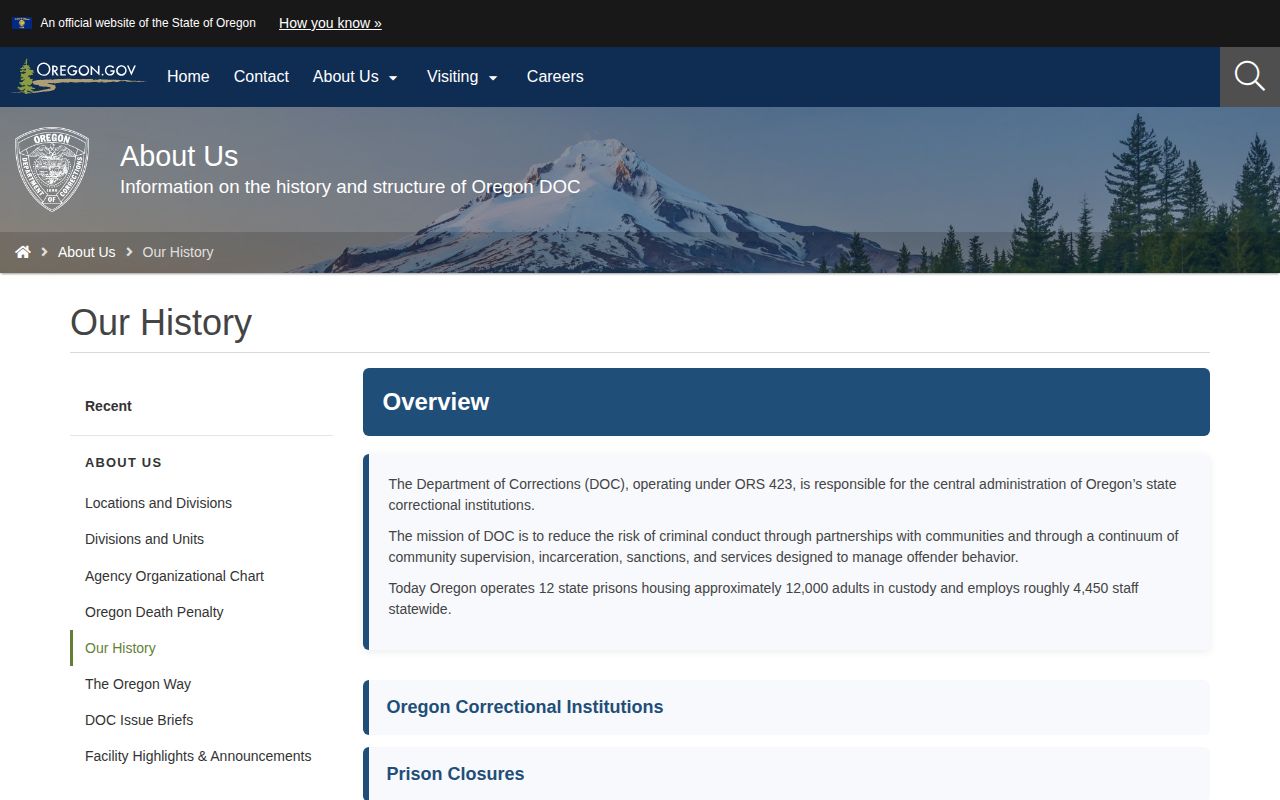
The official history capture prevents an old directory entry from being mistaken for a current prison.
Request MCCF Discharge Records
When OOS is incomplete or a fully discharged person no longer appears, use ODOC public records. Identify the person by full name and SID if known. Give the relevant date range and ask for precise public fields: admission, institution movements, physical release, release type, discharge, projected-date history, and the public portions of the Pen Pack.
A Pen Pack may include face sheets, a photograph, judgments or sentence orders, and some discharge, revocation, or sanction material. Protected medical, treatment, victim, and security information should not be requested as though it were public. Ask the agency to identify any exemption and release segregable nonexempt portions.
If a Board decision controlled parole, request the final order from BOPPPS by name, SID, and approximate hearing date. A final order can distinguish physical release, parole release, and supervision expiration. Those dates may differ.
Mill Creek Closure Context
MCCF served as a minimum-custody Oregon prison before its permanent 2021 closure. That institutional history is the distinctive fact that controls every lookup. A past address, directory listing, court file, or offender document can correctly name Mill Creek for an earlier custody period even though no one can be released from that closed facility today.
Search OOS only as a current locator for someone still in ODOC custody or Community Corrections. A fully discharged former MCCF resident may no longer appear. In that case, request the Pen Pack or a focused public record for the historic admission, Mill Creek placement, transfers, physical release, supervision, and discharge.
Do not call a transfer out of Mill Creek a release. The receiving prison and later ODOC status must be traced separately.
Marion Transfers and MCCF History
A Marion Jail Viewer code such as SENOSC can show that county custody ended in a transfer toward Oregon Corrections. It cannot prove that the person arrived at historic MCCF, and no current transfer can lead to this closed prison. Trace the dated ODOC movement record.
Three dates must remain separate. A projected release date is a calculation that can move. A physical release date records departure from the institution or prison custody. A parole, post-prison-supervision, or sentence expiration date marks the end of a later legal term. A person can be physically outside MCCF while still listed under Marion County Community Corrections.
Changes can follow an amended judgment, presentence-credit review, earned-time eligibility, misconduct sanctions, another sentence, a detainer, Board action, or short-term transitional leave. Oregon law does not support one percentage for all sentences. Measure 11 mandatory minimums under ORS 137.700 generally require the full listed minimum, while ORS 421.121 applies only to eligible sentences and has conditions and exclusions.
Note: Preserve the date and exact label shown by each official system before describing an MCCF release.
Reconcile Mill Creek Release History
A historical MCCF reference needs a timeline, not a current-facility search. Begin with the judgment and ODOC admission record. Then trace each institution movement through the last Mill Creek placement, any transfer to another Oregon prison, the physical-release event, community supervision, and final discharge. A date attached to MCCF may mark admission, movement, or departure rather than release to the community.
OOS can be a present-status clue if the person remains in ODOC custody or Community Corrections. It is not a full archive. VISOR likewise reports custody and supervision events supplied by participating agencies, not a permanent certified history. Save any SID and event date they provide, then use those details in the written ODOC request.
Ask for the public admission, institution-movement, physical-release, release-type, and discharge fields for the specified custody cycle. A Pen Pack may also include face sheets, judgments, sentence orders, and available supervision material. Protected medical, treatment, victim, and security information should not be requested as though it were part of a basic release record.
If the release led to parole or post-prison supervision, the supervising county may hold a later record. Marion Community Corrections is relevant only when the person was assigned locally. A final Board order may clarify conditions or expiration in a case within Board authority, but it does not turn MCCF into a current hearing site.
The final statement should remain narrow: transferred from Mill Creek on a stated date, physically released from ODOC on a stated date, entered named supervision, or fully discharged. That wording preserves the difference between a closed institution's history and the person's later legal status.
Resolve Mill Creek Record Conflicts
Older court papers and directories can use former agency names, addresses, or custody labels. Preserve those terms when quoting the historic record, then identify ODOC as the present custodian. The dated source may be accurate for its time even though the facility no longer operates.
If two historic records conflict, give ODOC the SID, both dates, both facility labels, and copies or citations for the conflicting entries. Ask which event was corrected and whether a certified movement or discharge record is available. This approach resolves the custody sequence without inventing a current MCCF office.
Public Record Search
Sponsored Results